15 Beard Styles for Patchy Beards: Shapes That Work With Gaps
Patchy growth can make a beard feel difficult to shape, but a deliberate outline can make sparse areas part of the design. These fifteen visual ideas range from light stubble and narrow jaw shapes to focused goatees and mustache pairings. Each keeps believable gaps or interrupted growth instead of hiding them with artificial density. Use the examples to compare cheek height, chin shape, sideburn treatment, and overall length, then save the look whose natural pattern feels closest to yours.
1. Patchy beard styles with soft low cheek lines

This short, softly edged beard keeps its cheek line low and lets the sparse upper cheeks remain visible. Fine, slightly wavy growth gathers more clearly along the jaw and chin, while a modest mustache stays lightly connected at the corners. Save this look if you want a restrained outline that respects uneven coverage without demanding a sharp, filled-in finish.
2. Patchy beard style with a short jaw strap and sparse cheeks
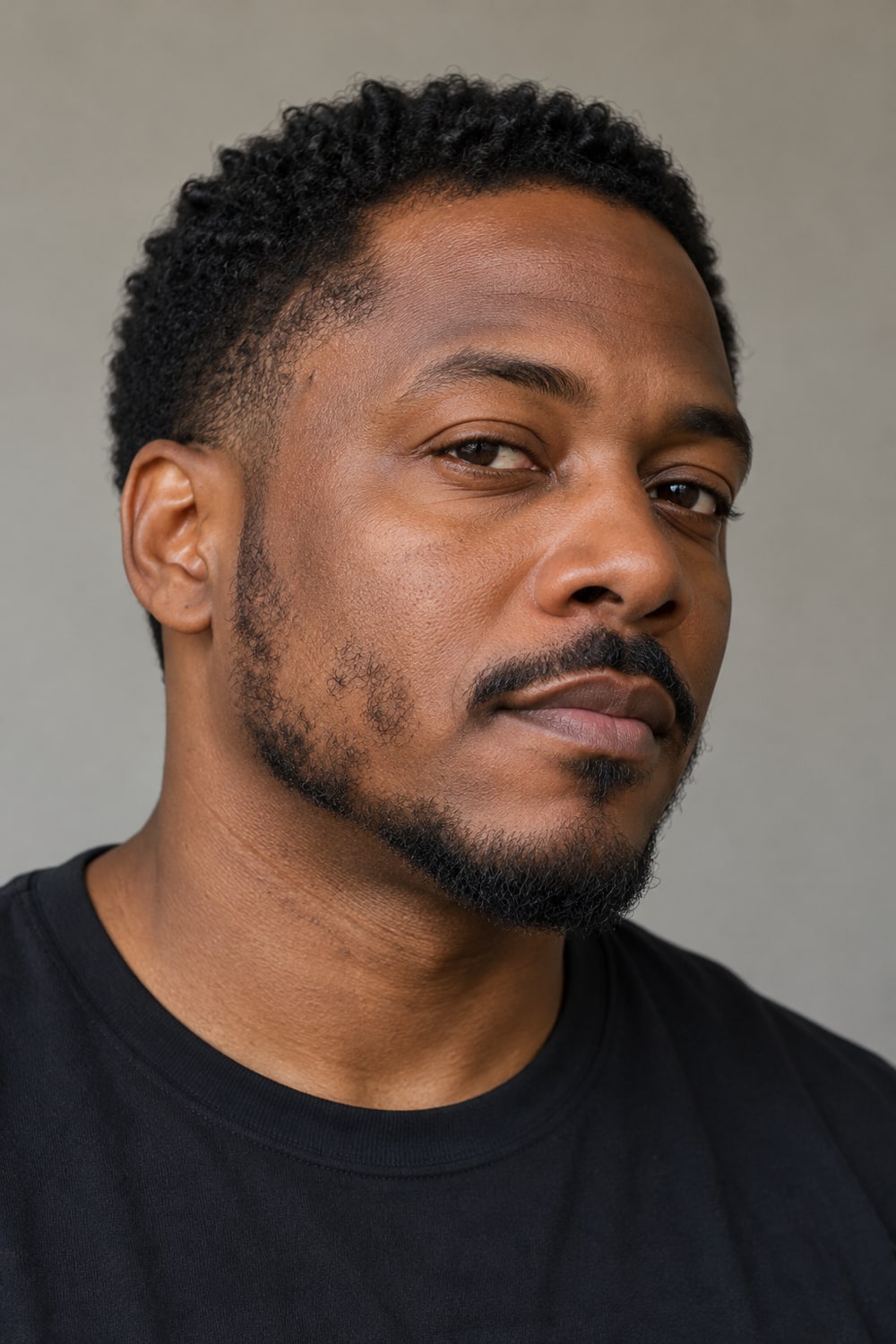
A narrow, short beard traces the lower jaw while visibly interrupted cheek growth remains natural and sparse. The low cheek line blends into a compact chin beard, and the slim mustache is separate from the jaw band. The three-quarter view keeps the beard outline and cheek gaps clear, offering a tidy grooming reference without suggesting full coverage.
3. Patchy beard style with uneven cheek growth
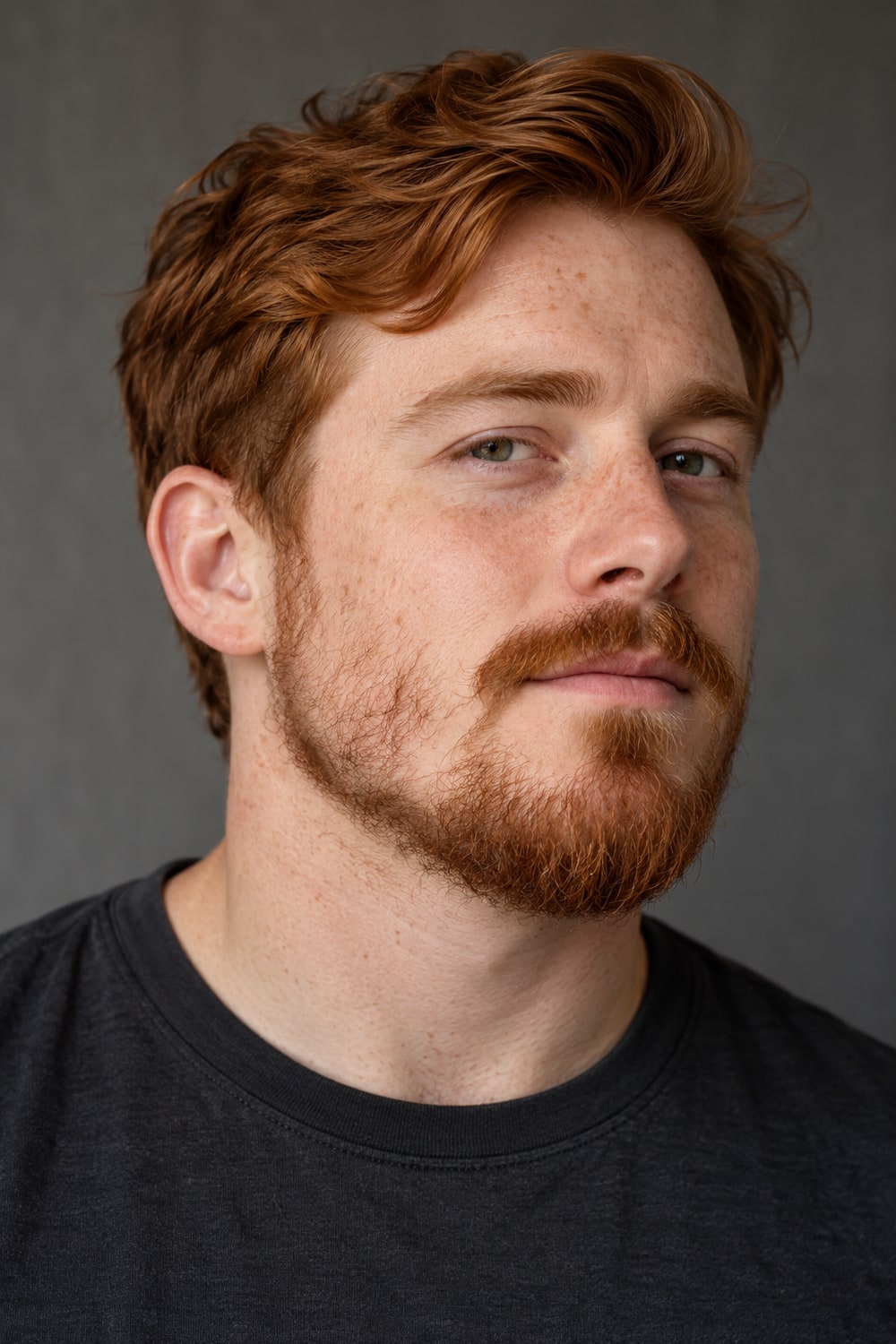
This short auburn beard keeps its strongest coverage around a softly rounded chin, while the cheeks show visible sparse, separated growth. A compact mustache pairs with the outline and connects lightly at the mouth corners. The low cheek line and clean neckline give the look definition without disguising its natural gaps, offering a practical reference for patchy beard grooming.
4. Patchy beard style with a pointed chin
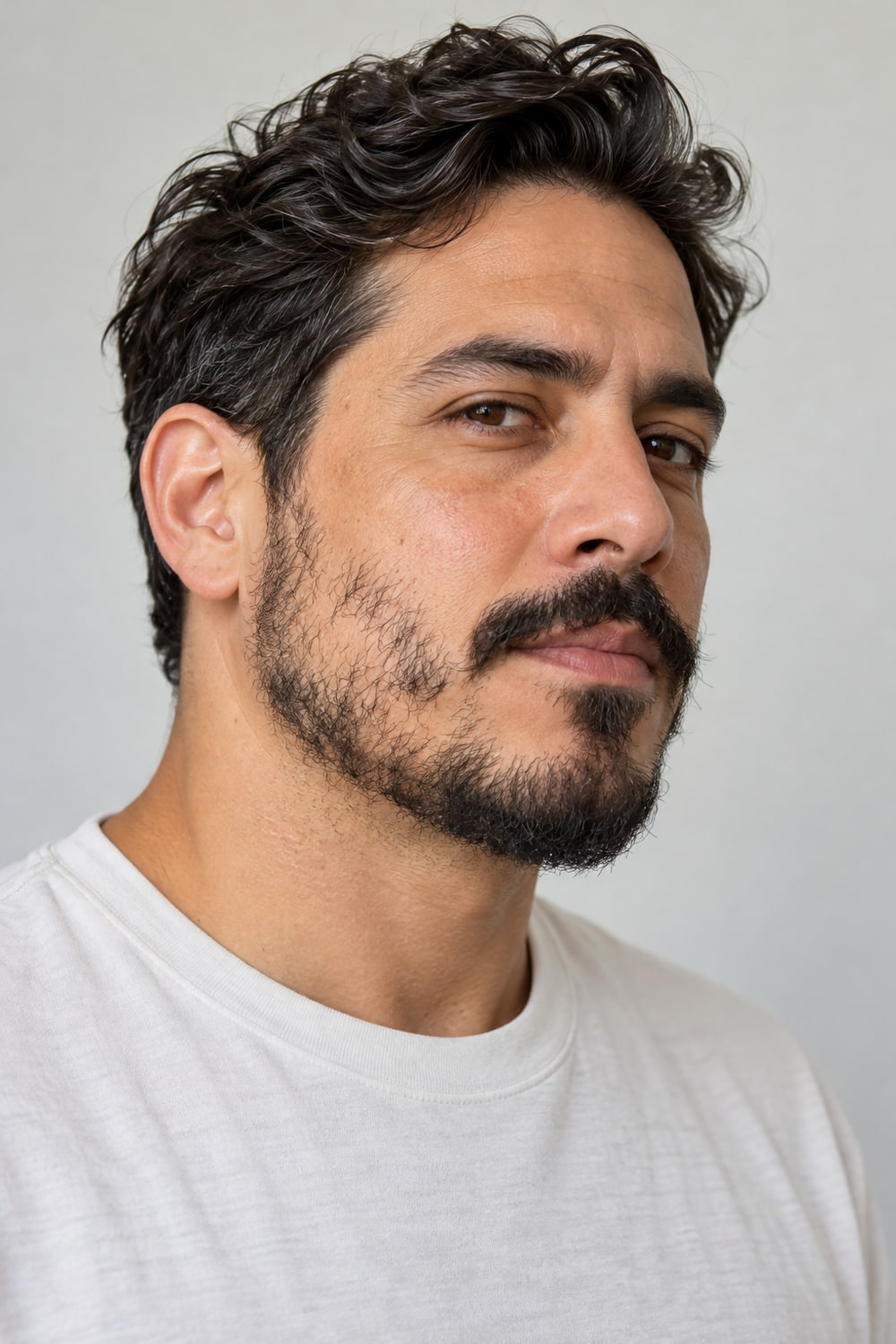
This short beard narrows toward a modest chin point, with visible gaps and lighter growth across the cheeks. The cheek edges are softly angled, while the fuller-center mustache stays separate at the corners. The three-quarter portrait shows the outline and natural texture clearly, with the beard tip and neckline in frame.
5. Patchy beard styles with a high cheek line and open gaps
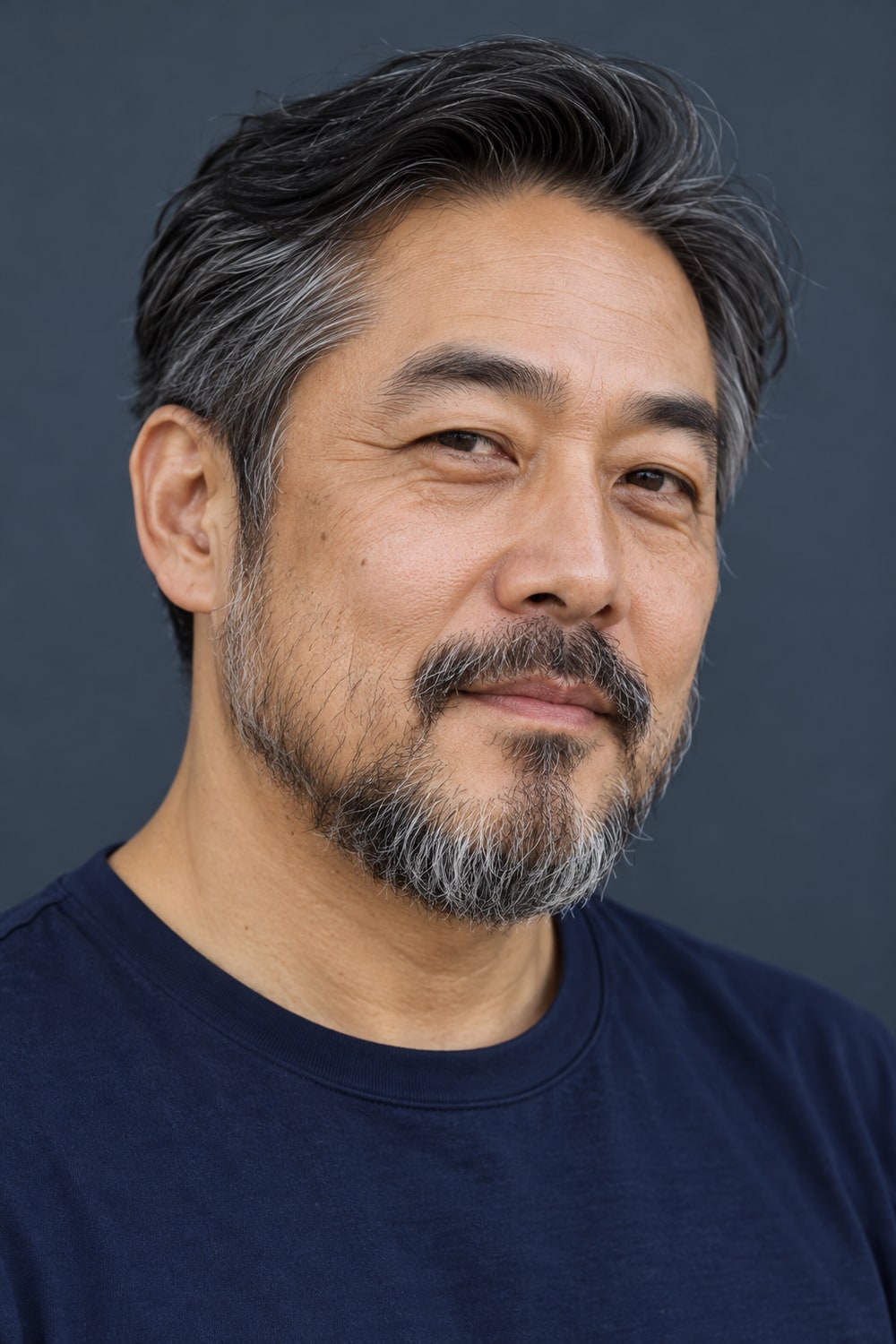
A softly defined, moderately high cheek line frames this medium-short rounded beard while sparse, interrupted growth remains visible across the cheeks. Salt-and-pepper strands gather more fully along the jaw and rounded chin, with a medium-width mustache that connects faintly at the corners. The three-quarter view makes the texture and uneven coverage easy to see.
6. Patchy beard style with sparse cheeks and a fuller mustache

A neatly shaped, full mustache draws focus, while interrupted growth stays visible across the cheeks and a short, softly rounded beard frames the jaw and chin. Faint connections at the corners keep the pairing cohesive without disguising the sparse areas. The low cheek line and tidy neckline offer a practical outline for men whose mustache grows more densely than their cheeks.
7. Patchy beard with a disconnected mustache
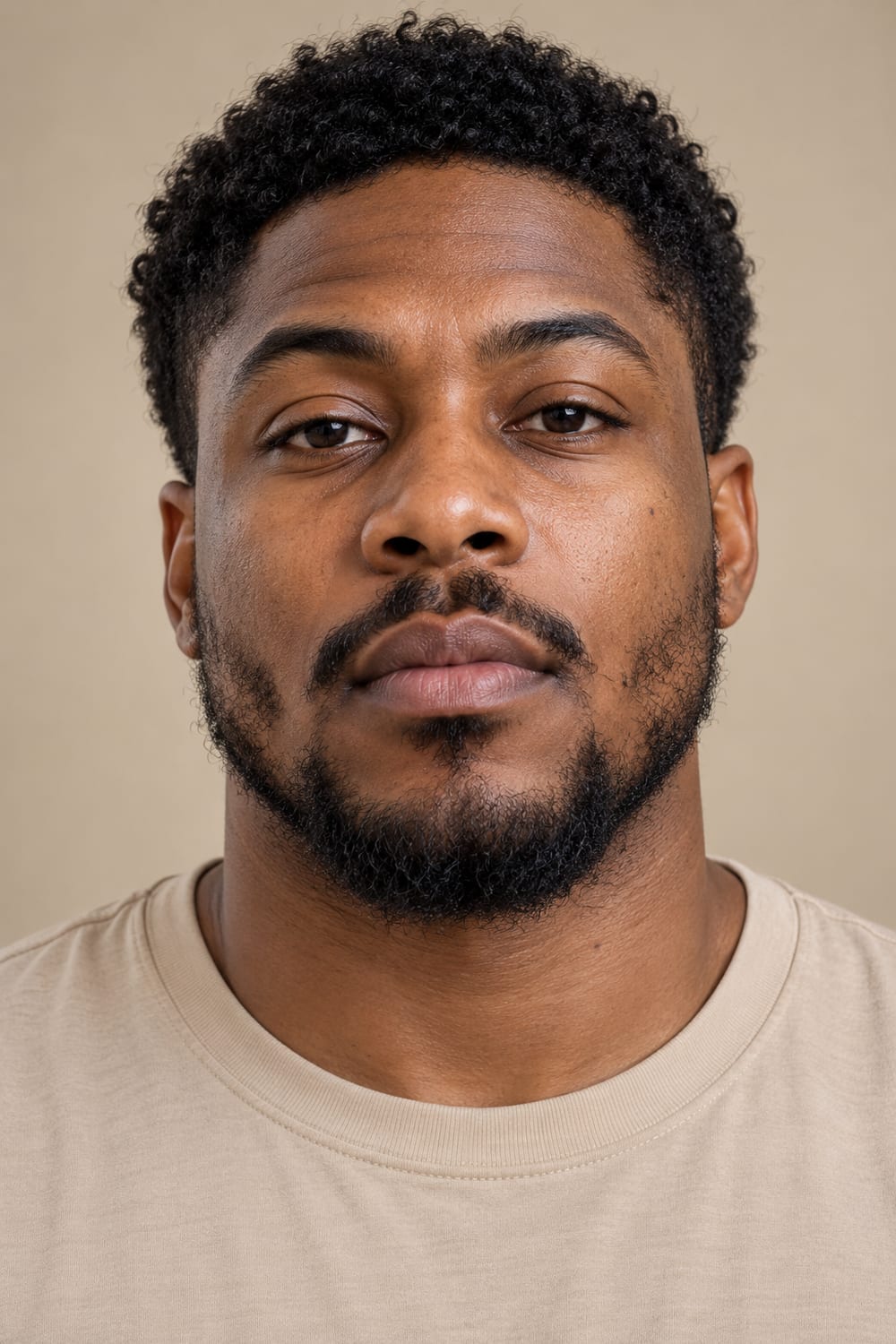
This short, coily beard forms a compact outline around the chin and lower jaw, with visibly sparse growth across the cheeks. The mustache is separated from the beard at both corners, making the pairing easy to see. A softly cleaned neckline and minimally tapered sideburns keep the look defined while preserving its natural uneven growth.
8. Patchy beard style with a soft cheek fade

This short, curved beard keeps its uneven cheek growth visible, with sparse areas along the cheeks and a soft transition from the sideburns. A narrow, lightly connected mustache and fuller chin shape give the outline definition without making the facial hair look uniformly dense. The three-quarter view shows the curl texture and natural jawline—useful inspiration to discuss with a barber.
9. Patchy beard style with an extended chin and sparse cheeks

This salt-and-pepper outline keeps the cheeks visibly sparse and lets the slightly longer chin provide the main shape. The jaw remains short, while the mustache is full enough to read clearly but separates at the corners. A clean neckline and natural sideburn transition keep the look groomed without concealing the interrupted cheek growth. Save this as inspiration for shaping a patchy beard around its natural coverage.
10. Patchy beard style with a short boxed lower outline
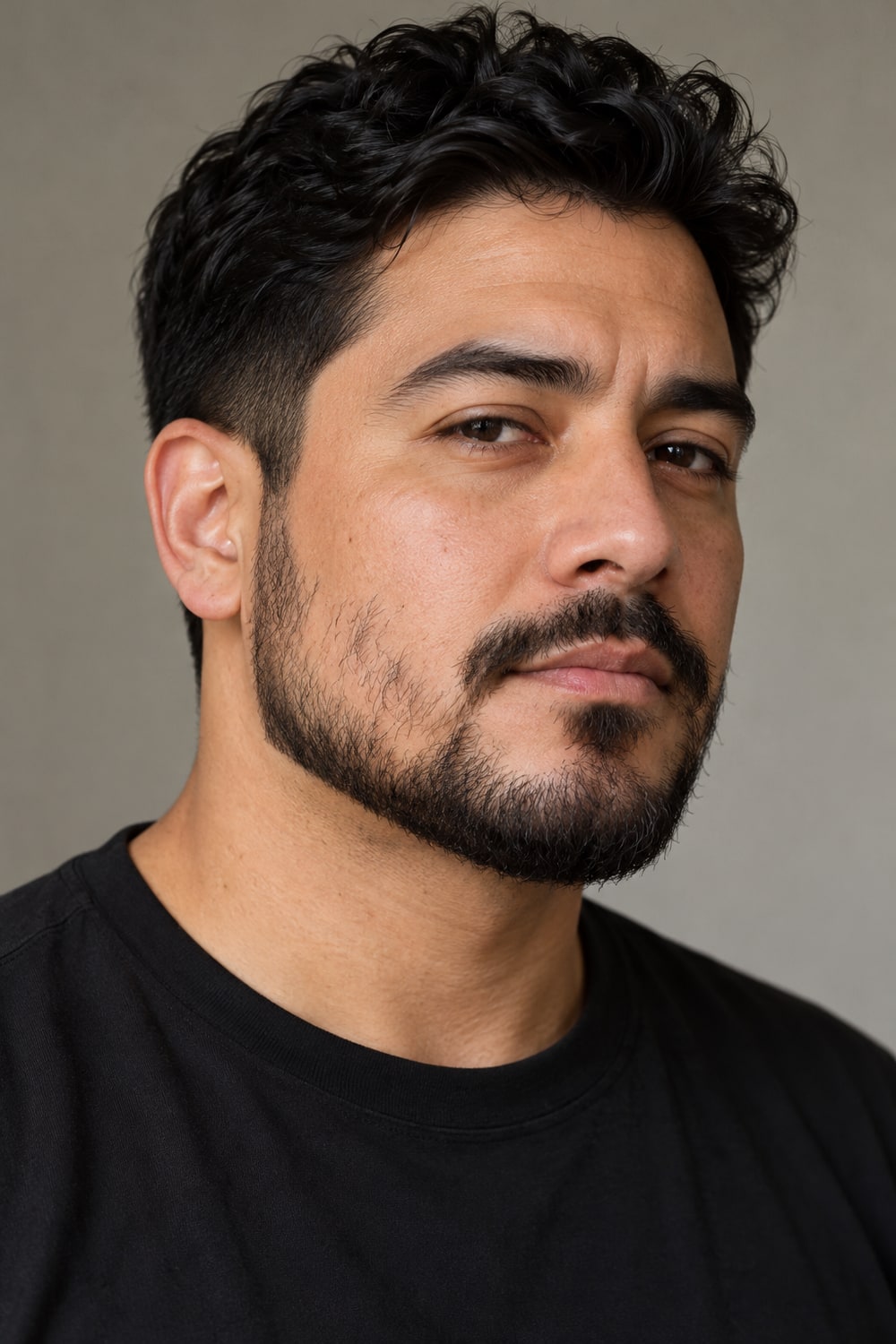
This short boxed lower beard gives the jaw a defined perimeter while the upper cheeks remain visibly sparse and uneven. Lightly squared chin corners add structure, and a short mustache meets the beard subtly. The three-quarter view shows the cheek patches, tidy low cheek line, tapered sideburns, and clean neckline—an inspiration for shaping the denser lower growth without filling every gap.
11. Patchy beard styles with a rounded jaw and broad mustache

The beard follows the jaw in a broad, rounded band, with scattered cheek growth left visible rather than blended away. A broader mustache anchors the upper lip and connects only lightly. Save this look if you prefer a softer perimeter and want to balance sparse cheeks with a more prominent mustache shape.
12. Patchy beard styles with a short chin strap and fade
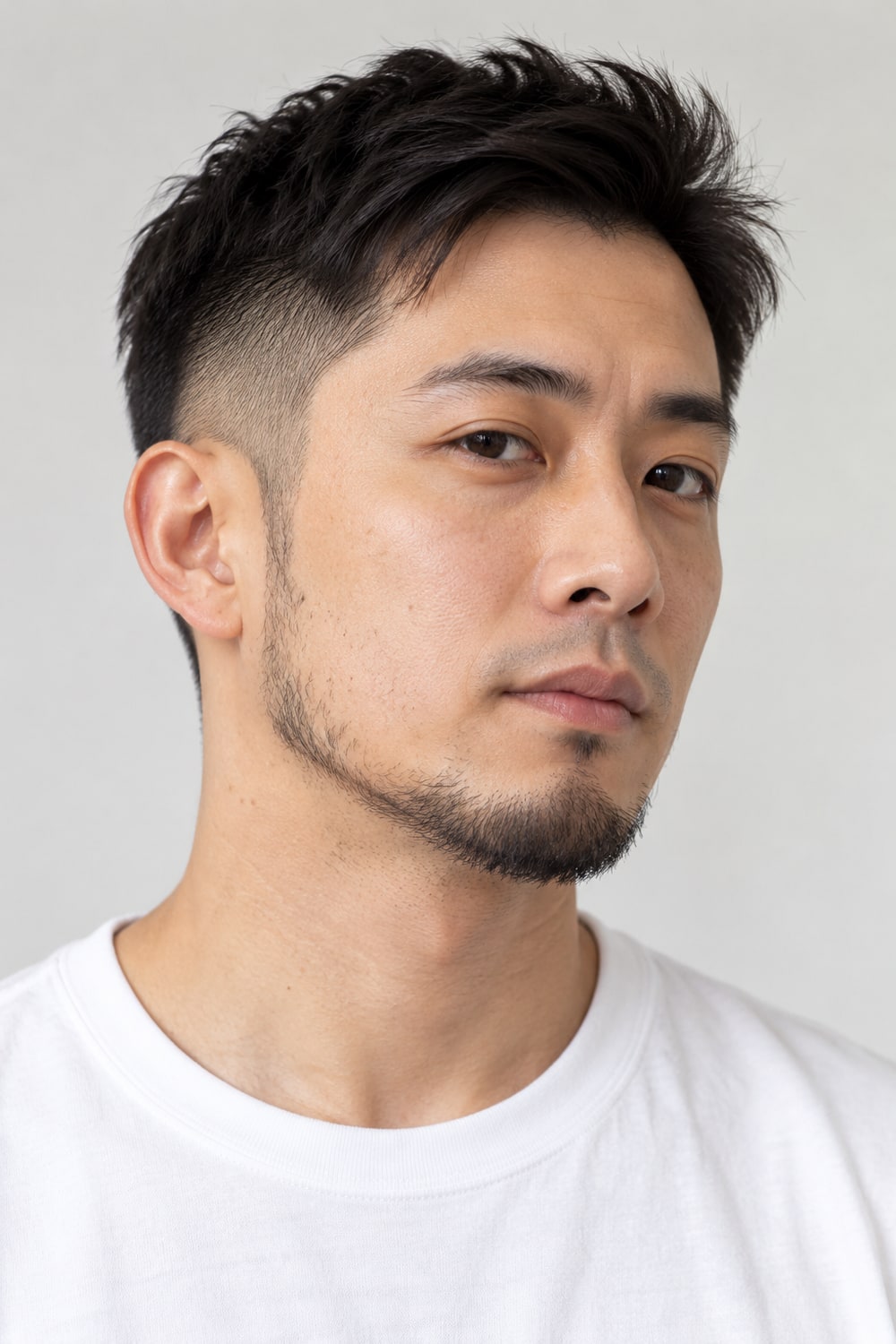
A slim chin strap follows the jaw and tapers into neat sideburns, while visible gaps and uneven growth remain across the cheeks. The chin is slightly fuller, and the upper lip is clean-shaven. This portrait shows a restrained grooming option for sparse facial hair, with the beard outline, fade, and neckline clearly visible.
13. Patchy beard styles with a short forked chin shape
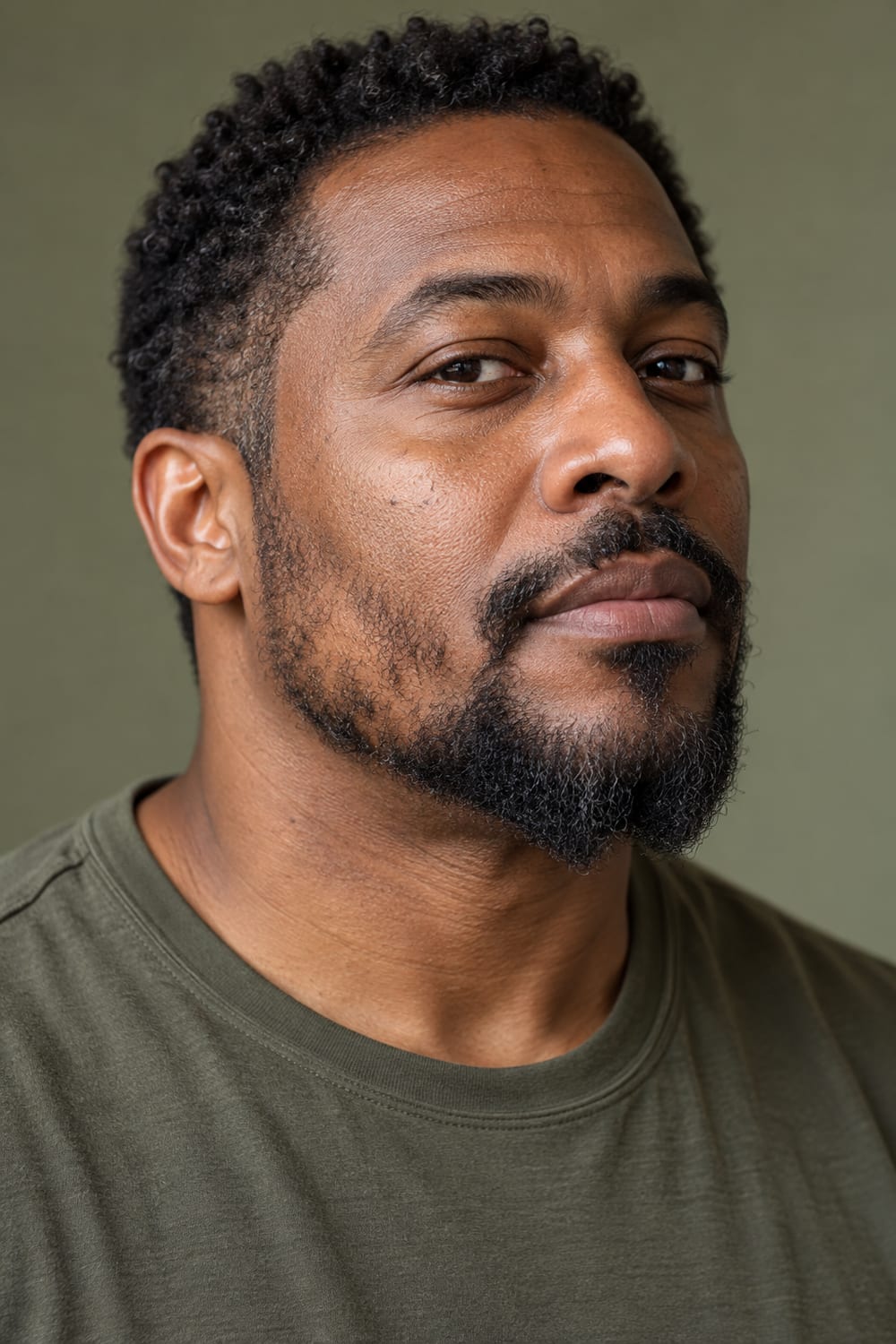
This short beard keeps distinct sparse areas across the cheeks, with a low, softly irregular cheek line and a clean neckline. The chin ends in a subtle two-lobed fork, while the narrow mustache appears more connected on one side. The three-quarter view makes the natural asymmetry easy to see, and the full beard tip remains in frame.
14. Patchy beard styles with a soft goatee and bare cheeks
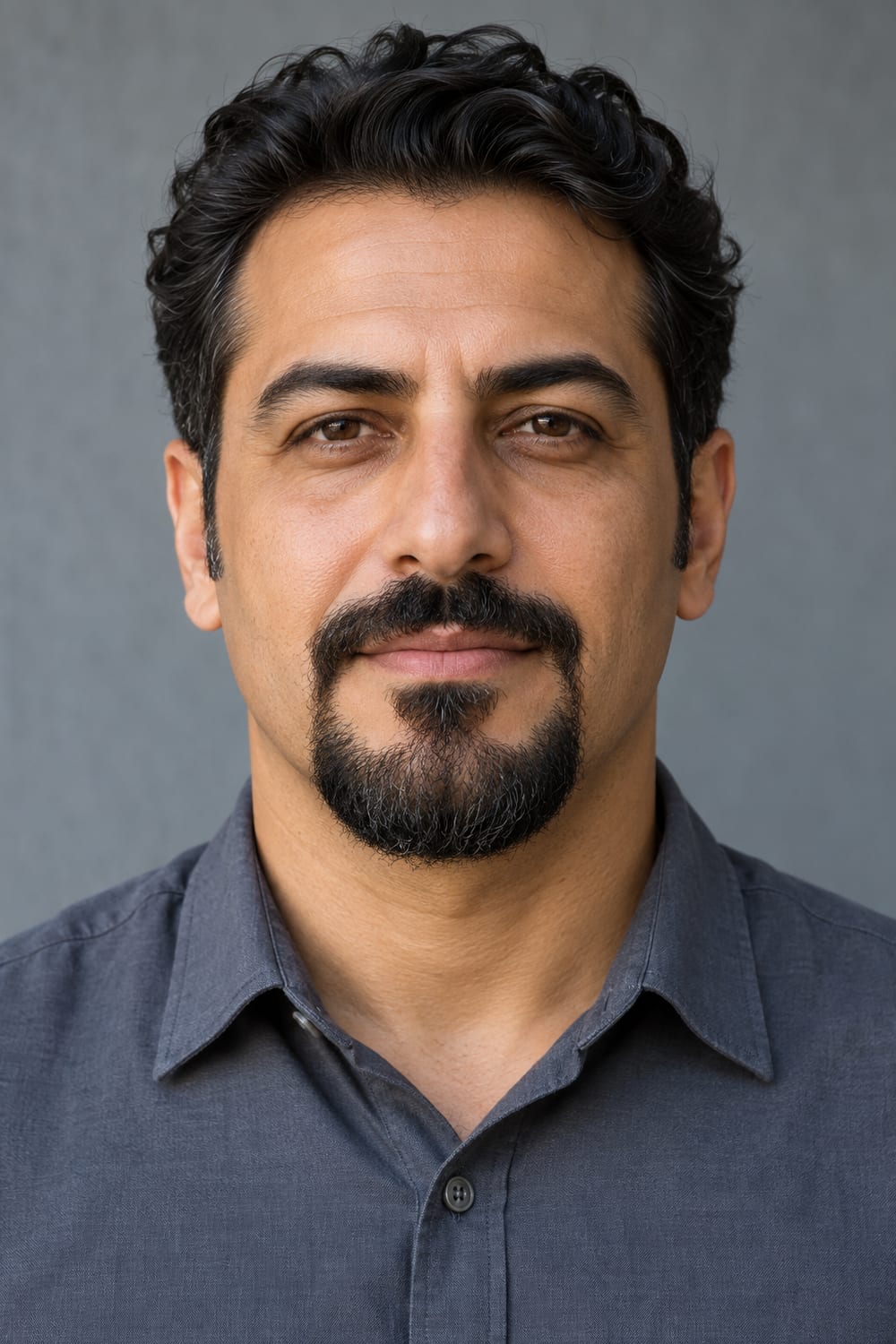
A compact goatee concentrates growth around the mouth and chin, leaving the cheeks cleanly shaved rather than filled in. Its chin is rounded, and the mustache joins the goatee in a connected loop. Save this focused shape if your cheek growth is especially light and you prefer a clear central design.
15. Patchy beard style with a soft sideburn-to-chin taper
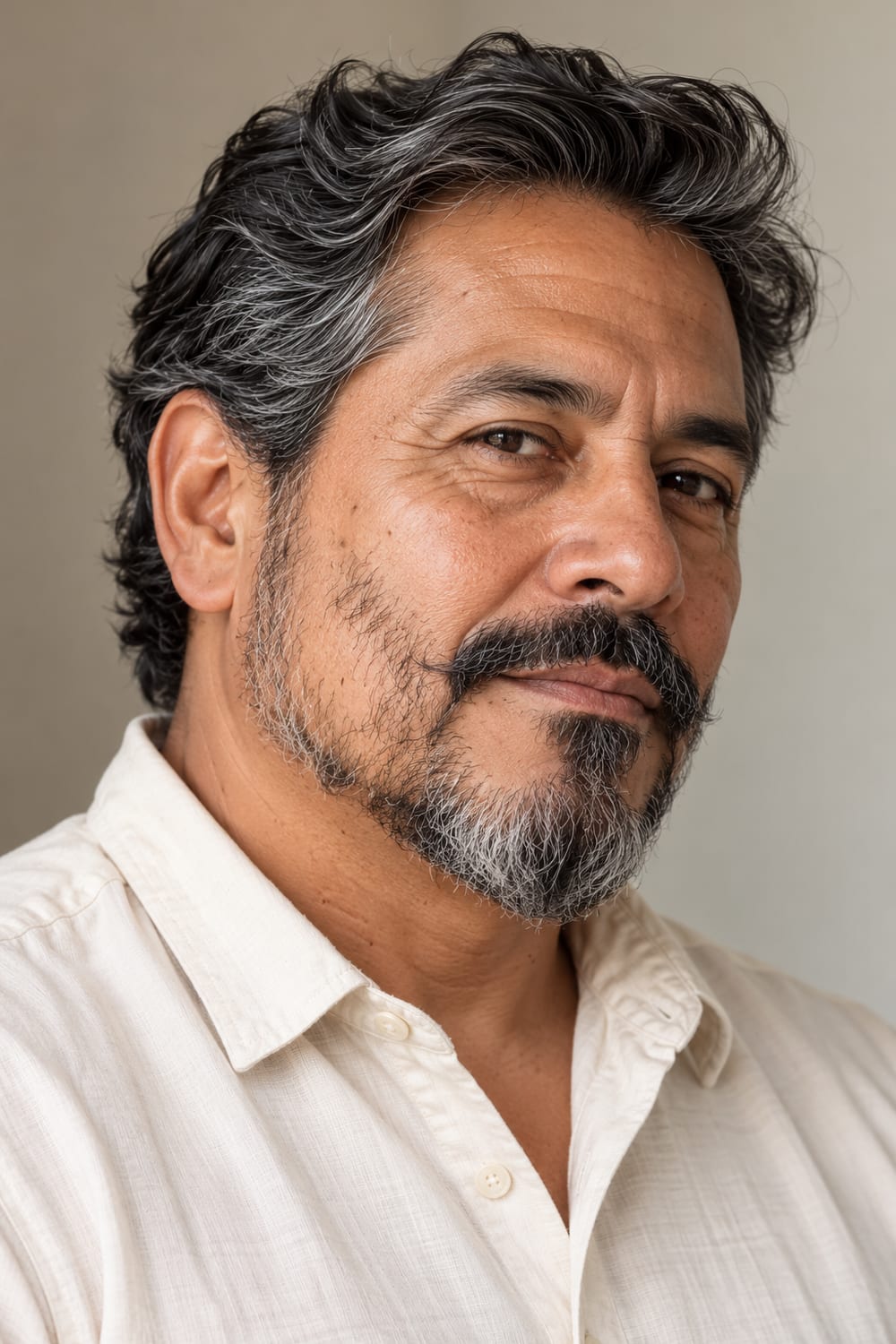
This portrait shows a gray-streaked beard tapering from blended sideburns toward a modest chin point. Sparse, interrupted cheek growth remains visible beneath a softly diagonal cheek line, while the curved mustache connects at both corners. The three-quarter angle makes the uneven coverage and overall outline easy to see, offering a grooming reference that works with the beard’s natural growth pattern.
How to choose between these beard style ideas
Start with the length you can maintain comfortably, then consider where your density is strongest and where it breaks up. Coarse, fine, straight, and curly textures each sit differently within an outline, so use the photos as shape references rather than promises of coverage. Decide whether you prefer a soft or crisp cheek line, a rounded or pointed chin, and a connected or separate mustache. Choose an outline that accepts your growth pattern and upkeep preferences instead of requiring daily correction.
What to discuss with your barber
Bring a saved image to your barber and point out the specific features you want to keep: cheek-line height, chin shape, neckline, sideburn transition, and how the mustache meets the beard. Explain where your growth is sparse or interrupted so the barber can work around it without filling gaps into a different design. Ask what upkeep the outline will require with your texture and density. If you use the beard try-on tool linked from this article, treat it as a way to preview facial-hair shapes while preserving your identity.